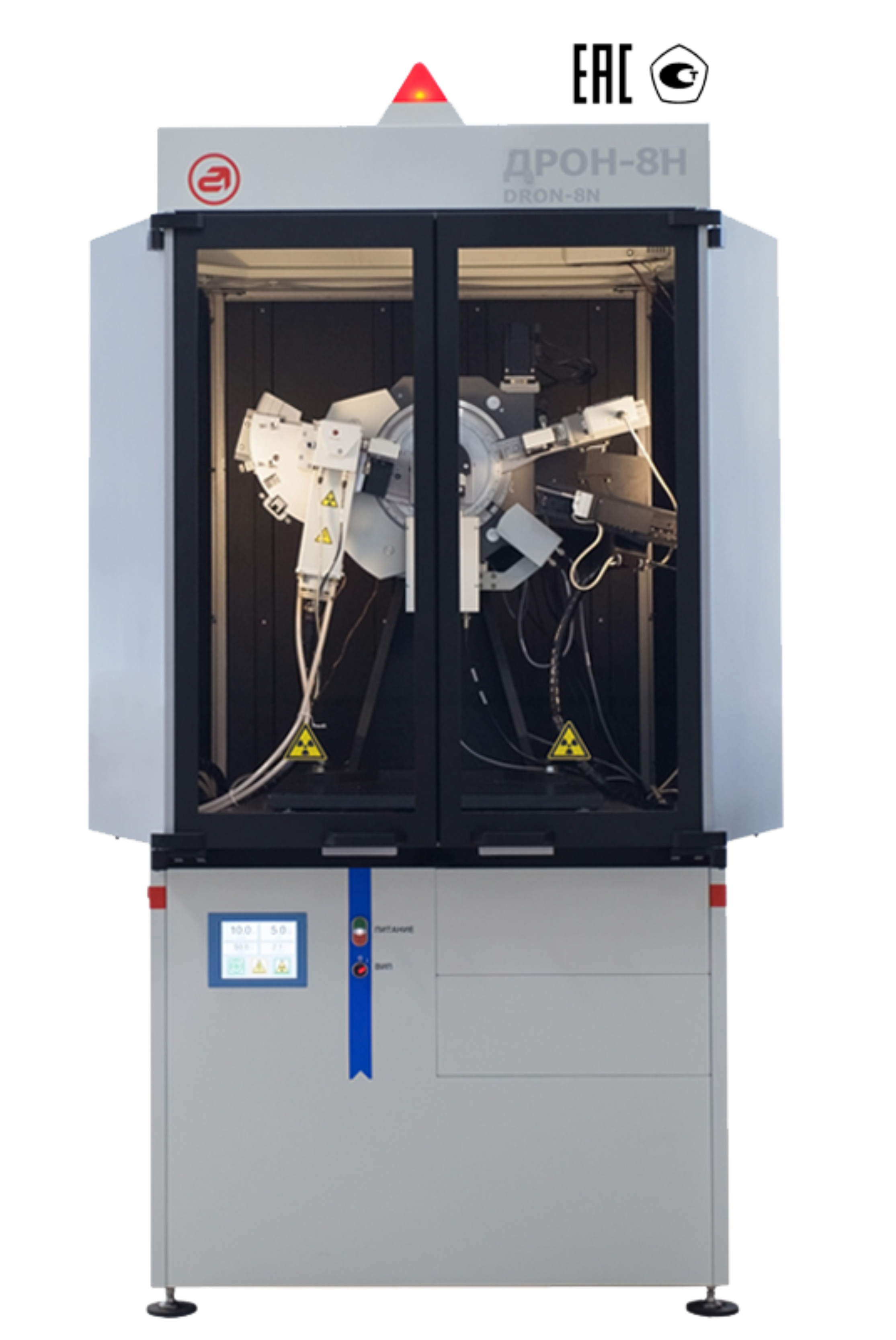
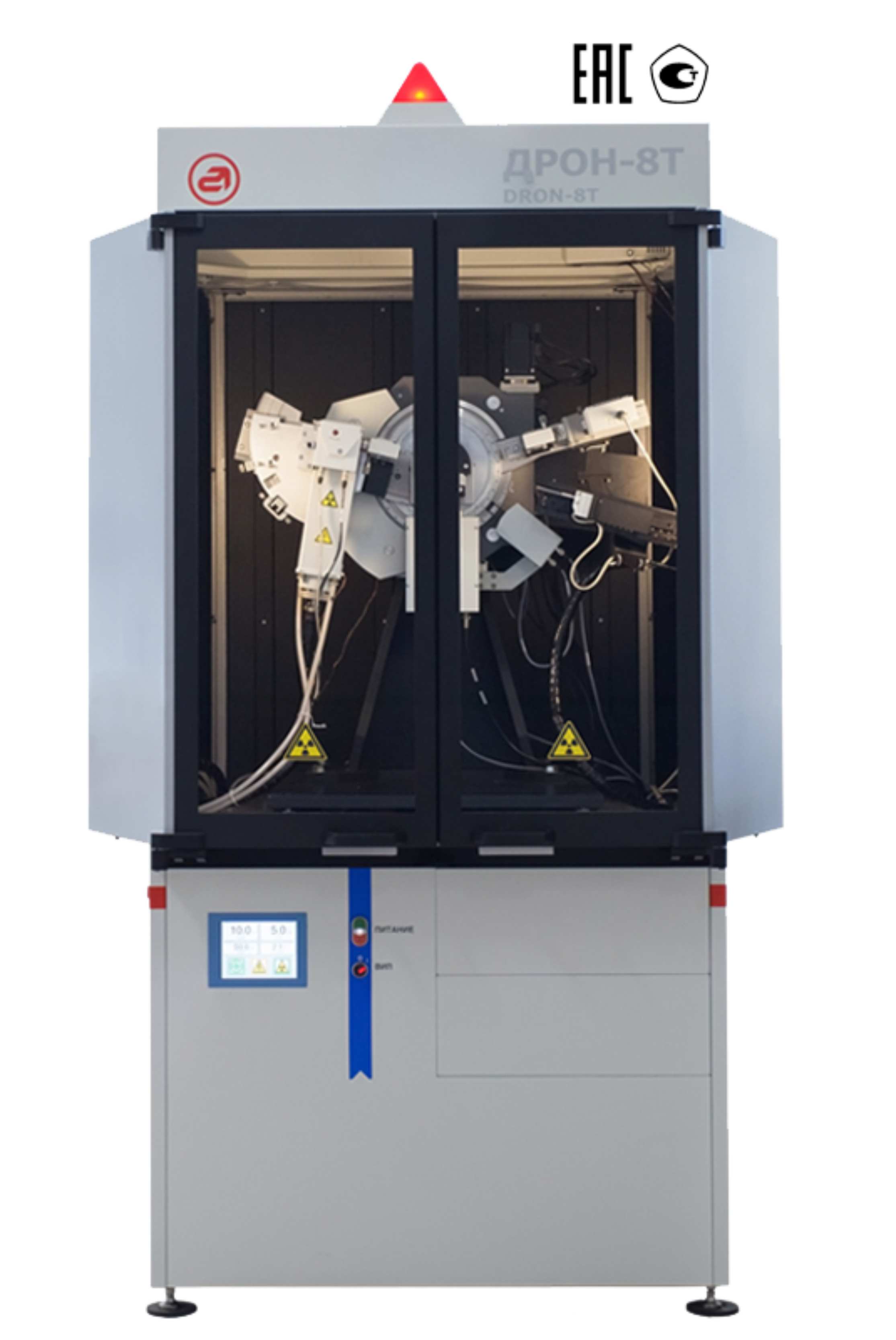
Diagnostics and monitoring of engine condition
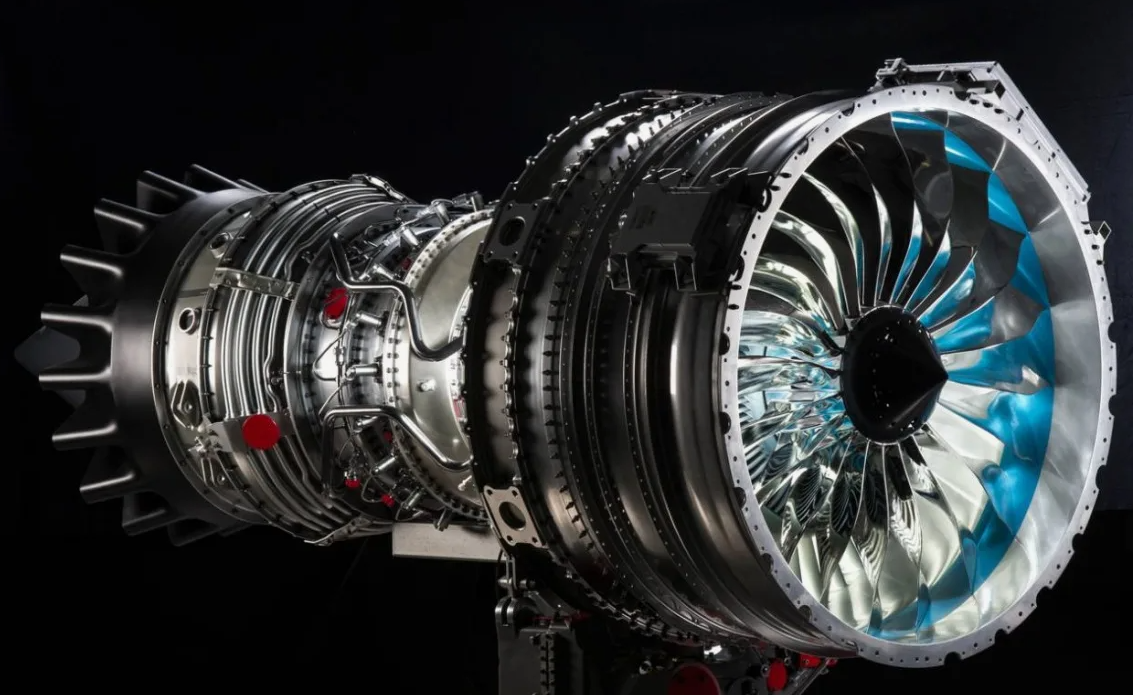
X-ray diffraction analysis
At the stages of development, production and operation of engine parts and units, it is necessary to solve a number of problems related to the study of the composition and structural characteristics of crystalline materials. Such problems include:
- qualitative and quantitative phase analysis;
- determination of residual stress values;
- texture analysis;
- determination of the quality of single crystals;
- analysis of crystallographic orientation;
- analysis of distortions of the crystal lattice metric.
Qualitative and quantitative phase analysis
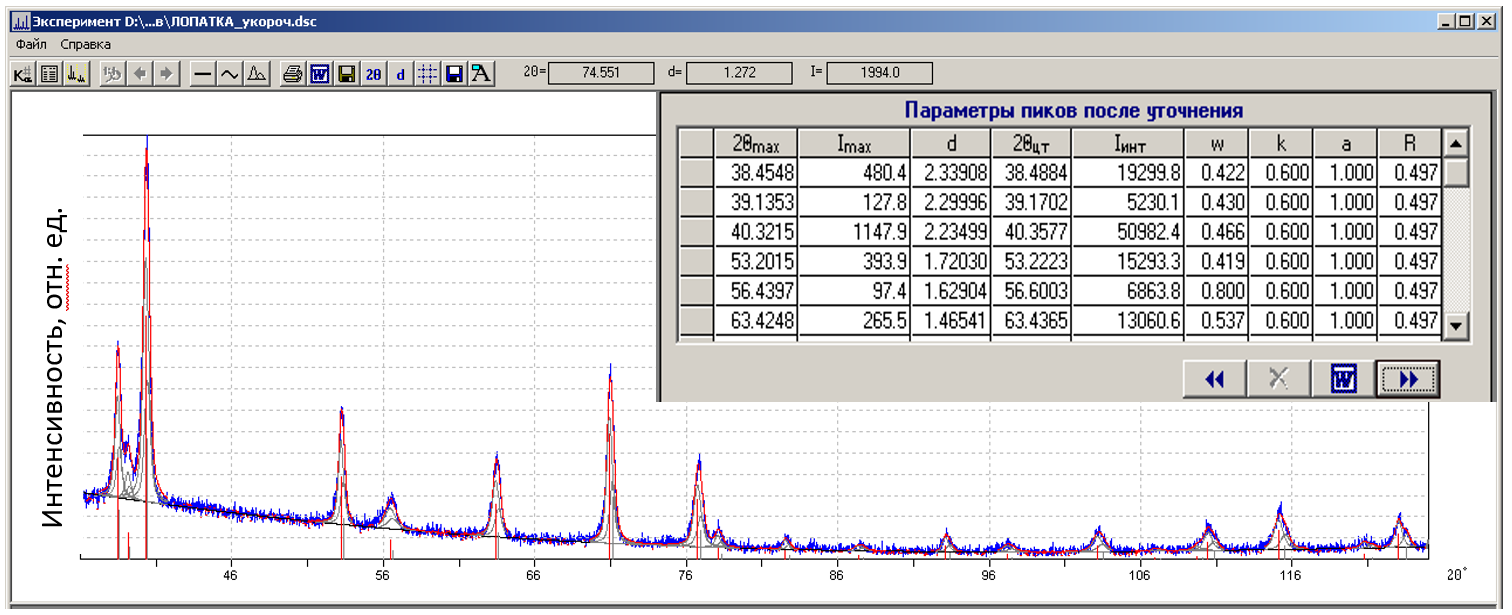
Analysis of the diffraction pattern reveals the presence of two modifications of titanium alloy (hexagonal and cubic), in a ratio of 4:1. The concentrations of the alloy components were calculated using the corundum number method.
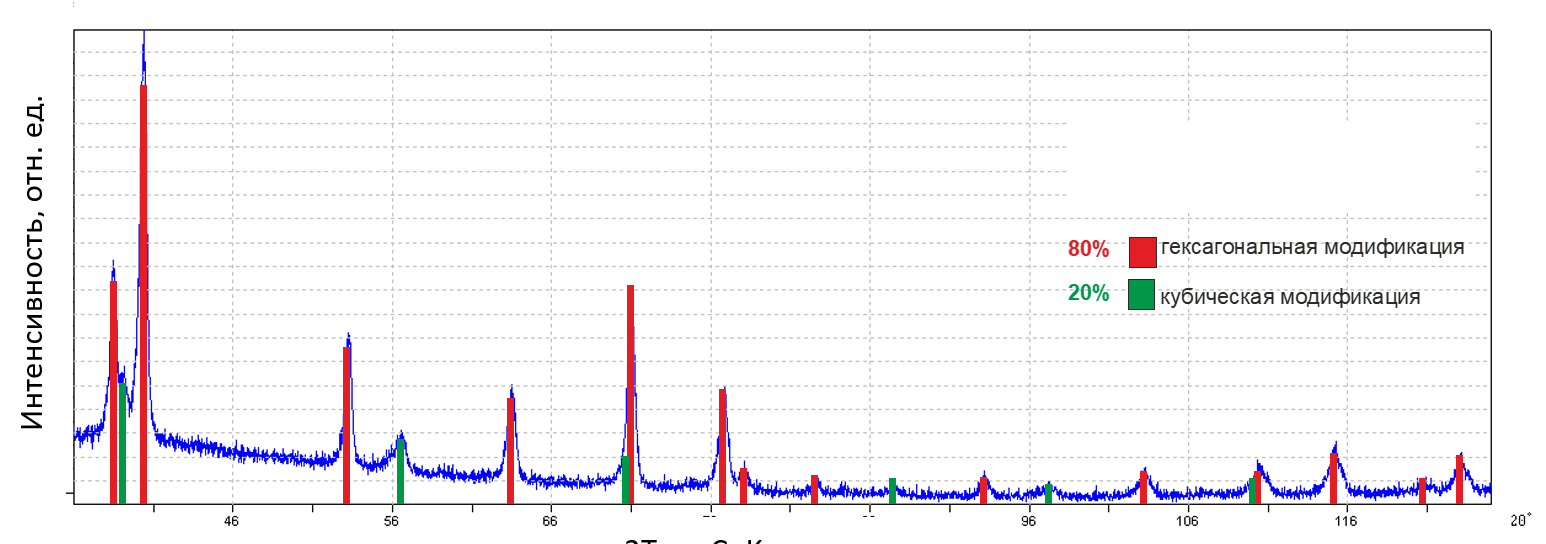
Processing of diffraction pattern and determination of phase composition of material of compressor blade made of titanium alloy
Texture analysis
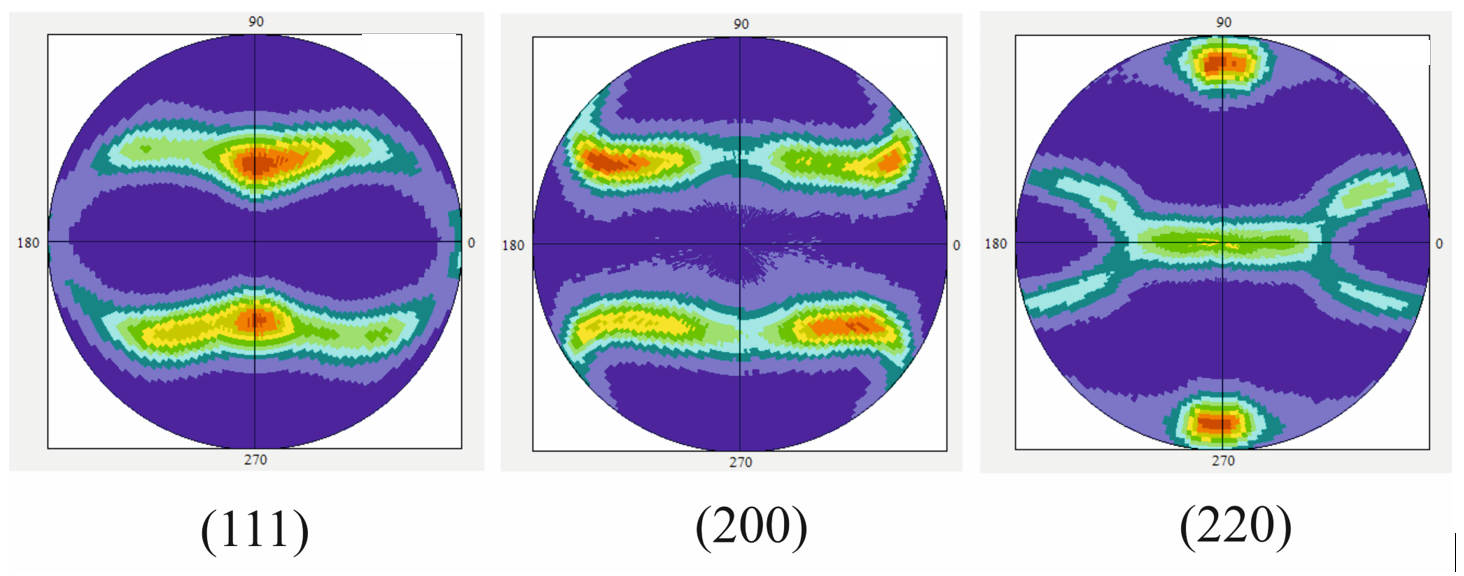
Direct pole figures obtained from a sample of pressed strips of high-strength aluminum alloy of the Al-Cu-Li system for different reflections. (Analysis of the obtained PPFs allows us to determine that the dominant orientation is the component of the {110}
Residual stress analysis
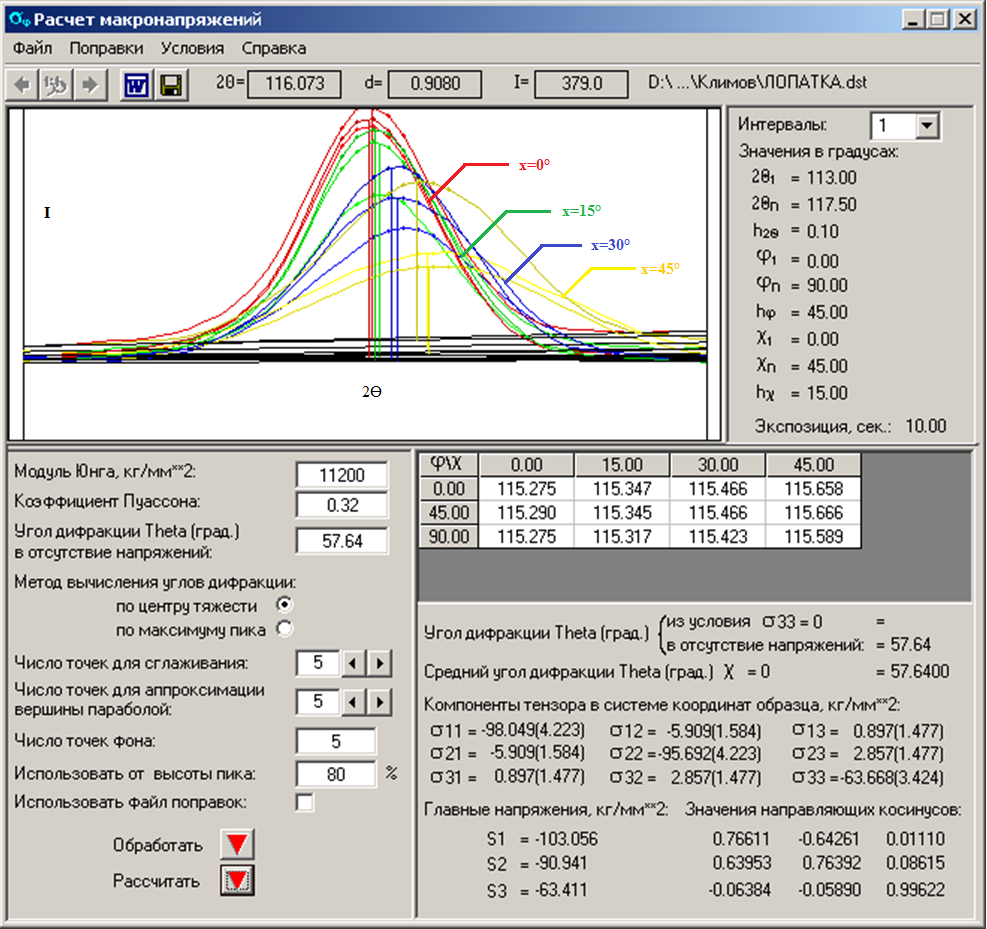
Determination of residual stresses in a titanium alloy compressor blade. (Calculation shows that the blade under study is subject to residual compressive stresses that are non-uniformly distributed in the near-surface layer)
The analysis of residual stresses is carried out based on the shift of the far-angle Bragg reflection from the initial value when changing the angle of incidence of the primary beam on the sample, followed by calculation of the stress distribution using specialized software.
Determining the temperature of a part using the crystal lattice metric
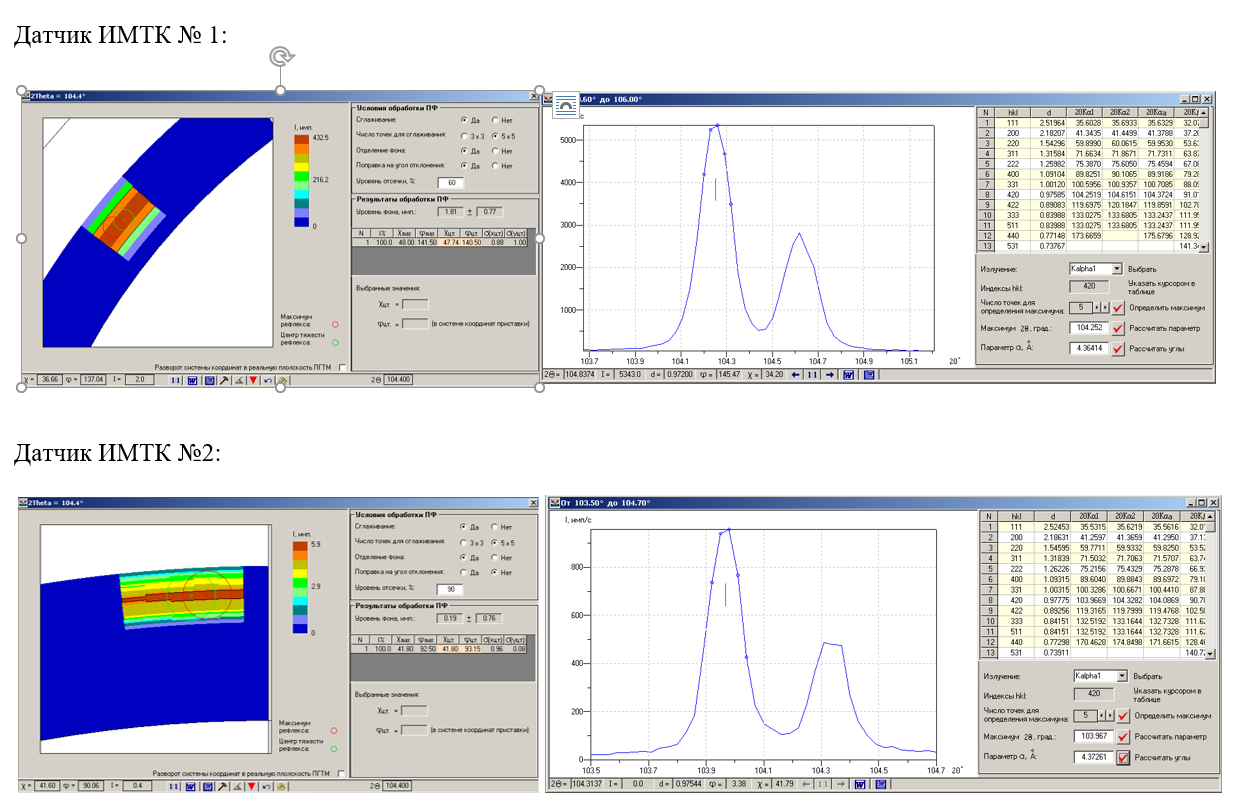
Determination of the crystal lattice parameters of two IMTK sensors by reflex 420. (The difference in the metrics of their lattices is 0.00153 Ǻ, which makes it possible to estimate the difference in temperature impact by 132 °C)
Rejection of monocrystalline seeds according to their orientation and quality
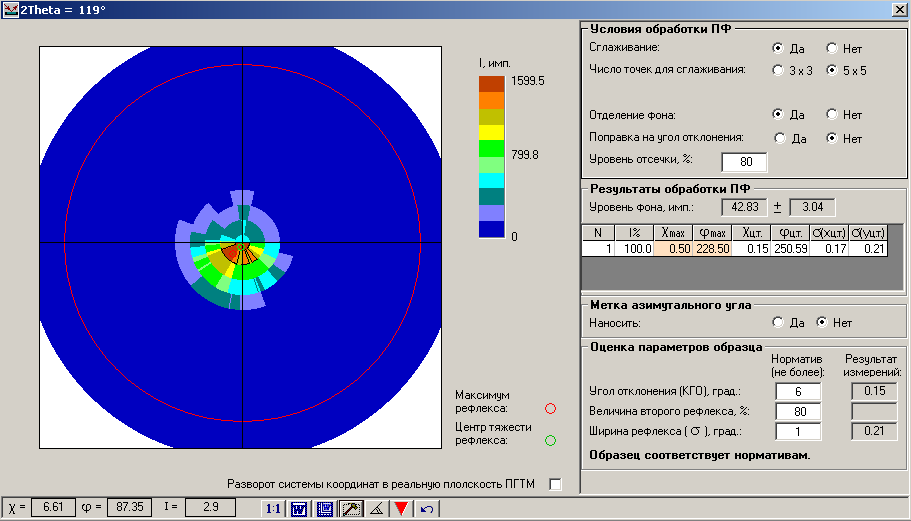
Processing of direct pole figures with determination of reflex coordinates
Determination of the orientation of single crystals and assessment of the quality of single crystals in comparison with the required indicators is determined by the need to select high-quality seeds of a given crystallographic orientation for growing turbine blades.
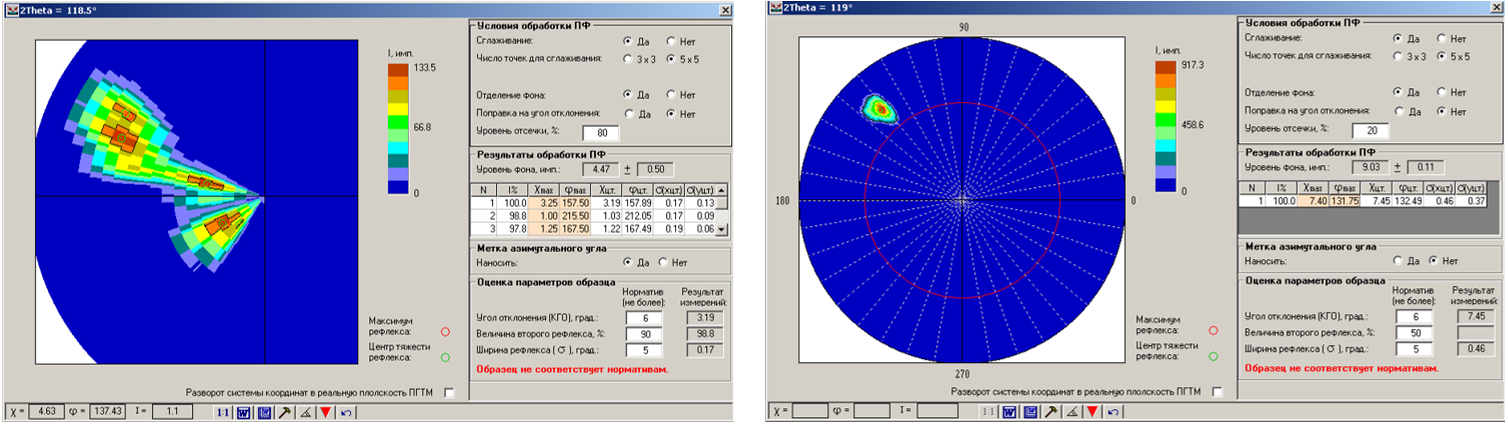
Rejection of the seed in accordance with the required standards by various criteria: on the left - by quality (mosaic), on the right - by orientation (deviation angle greater than the specified limit)
Study of turbine blade to determine orientation with respect to crystallographic axes
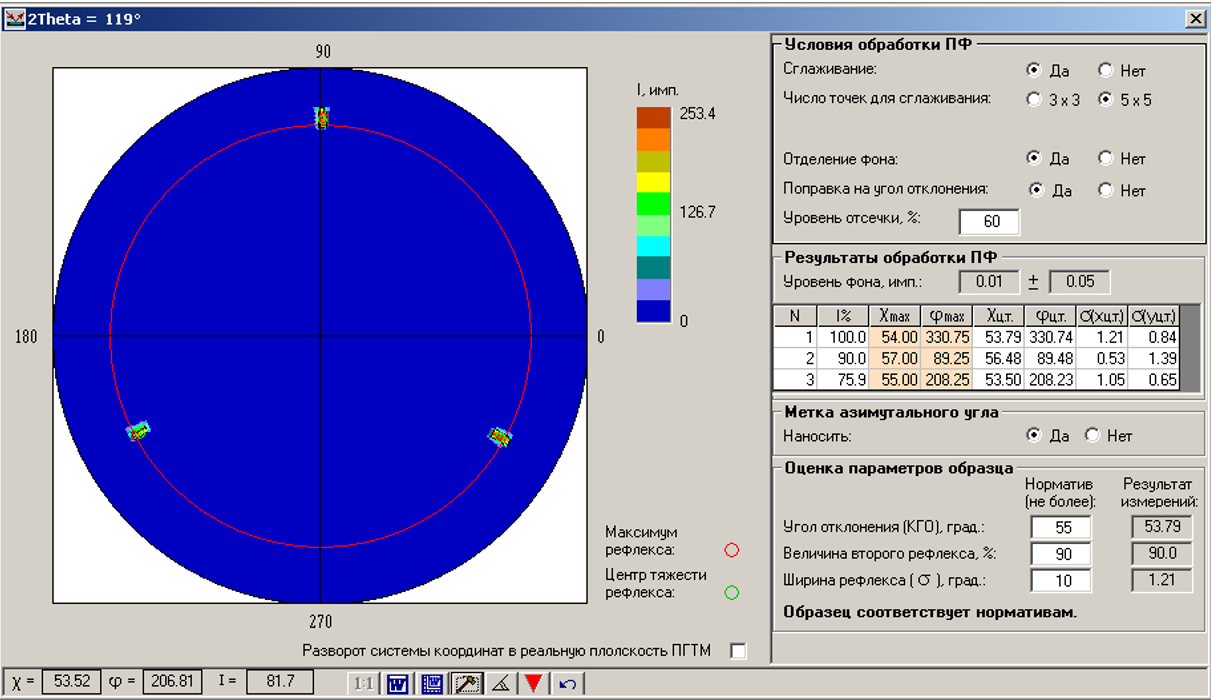
The turbine blade direct pole figures measured by the tilt method (at the origin of coordinates, the third-order axis of the cubic lattice is observed)
The instability of the processes of blade structure generation from the seed leads to the need to study the finished part to determine the orientation of the blade in relation to the crystallographic axes, followed by rejection of the finished product.
Conclusion
The X-ray diffraction method is informative for the technological control of raw materials and finished products in mechanical engineering production, allowing for a full analysis of not only their composition and degree of crystallinity, but also to identify those structural features that have a significant impact on their physical and mechanical properties.
The examples considered clearly demonstrate the functional and methodological capabilities of diffractometers manufactured by JSC "IC "Burevestnik", which, in combination with analytical software, offer a reliable solution to production and research problems.