Refractories and heat-resistant ceramics
X-ray diffraction analysis
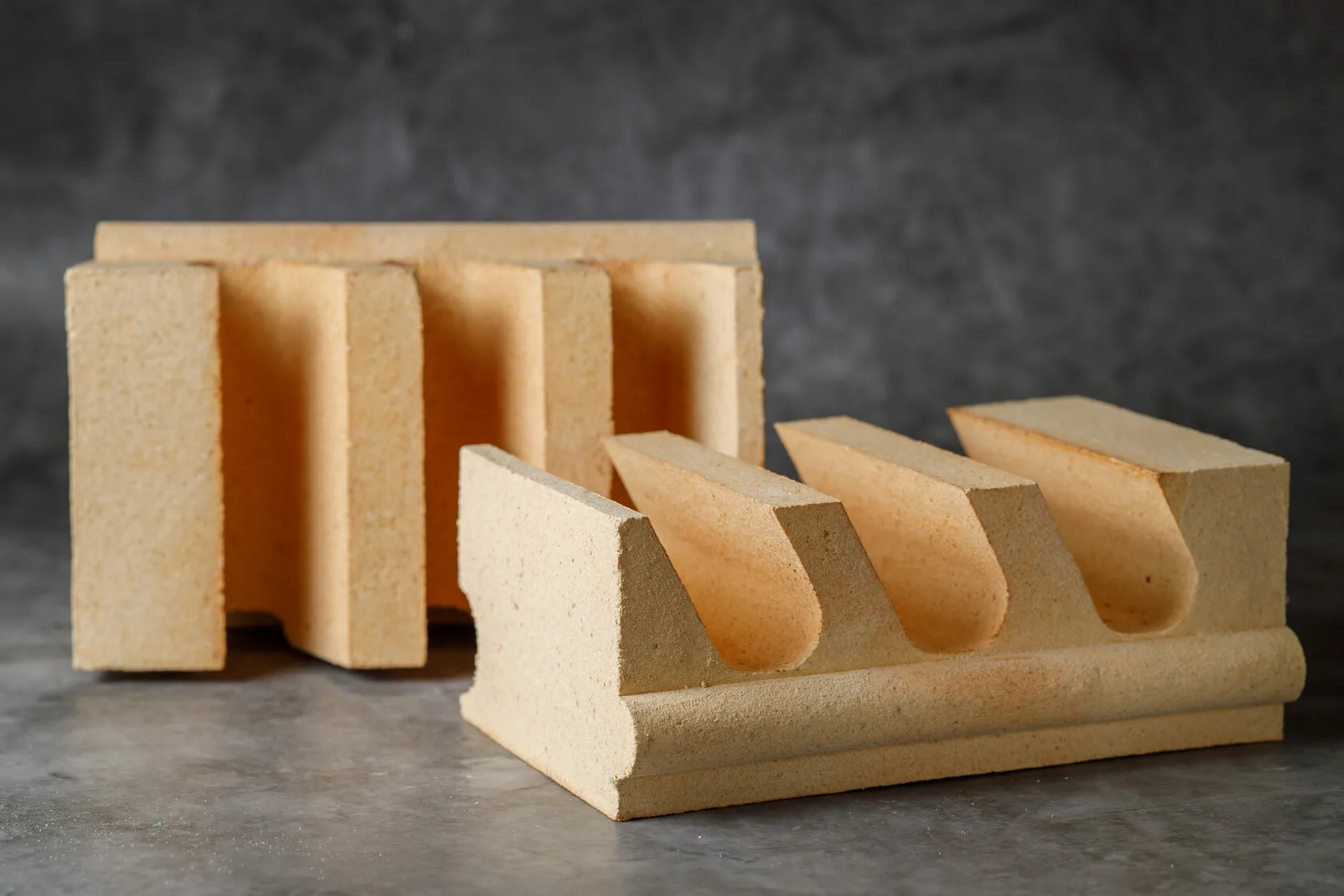
Depending on the chemical composition, refractories are classified into alumina-silica, silica-silica, aluminosilicate, lime, magnesia-silicate and others.
Most refractory materials and raw materials for their production are crystalline substances, so for qualitative and quantitative determination of the phase (mineral) composition of these materials can be successfully used the method of X-ray diffraction, which allows:
- analyze the composition of raw materials;
- control technological processes at various stages of production;
- determine the content of amorphous phase in the sample;
- calculate the metric of the crystal lattice of a substance and diagnose its changes at iso- and polymorphism;
- investigate solid solutions and identify structural heterogeneity of crystalline materials;
- reveal preferential orientation of crystallites.
If the diffractometer is equipped with additional hardware and software, the method allows analyzing phase transformations and chemical reactions that can occur in crystalline material under the influence of high/low temperatures, pressure, atmospheric composition (vacuum, inert gases, humidity).
Example of method implementation
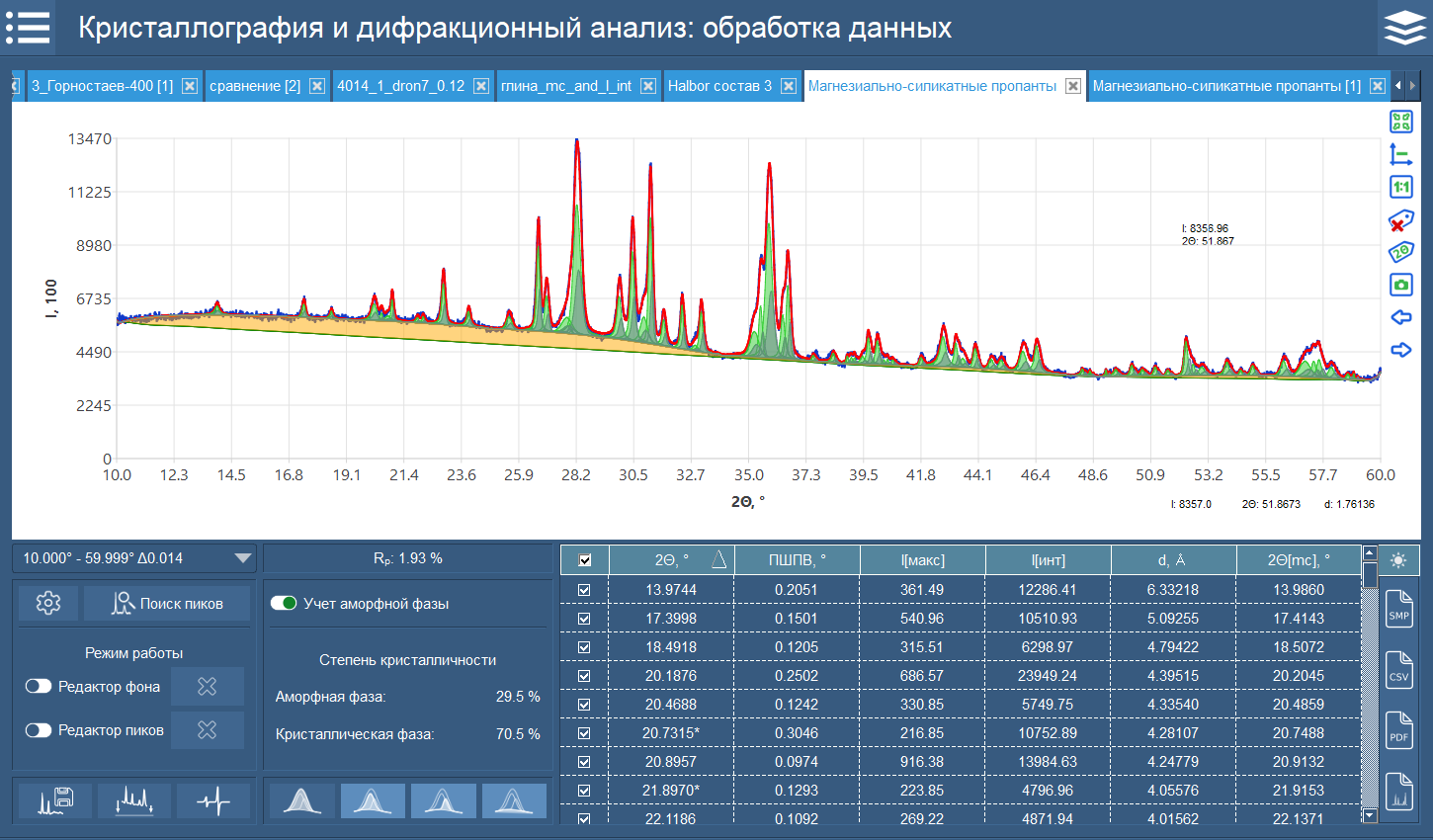
Estimation of amorphous phase content (about 30%) in magnesia-silicate refractory
Analysis of mineral composition of magnesia-silicate refractory
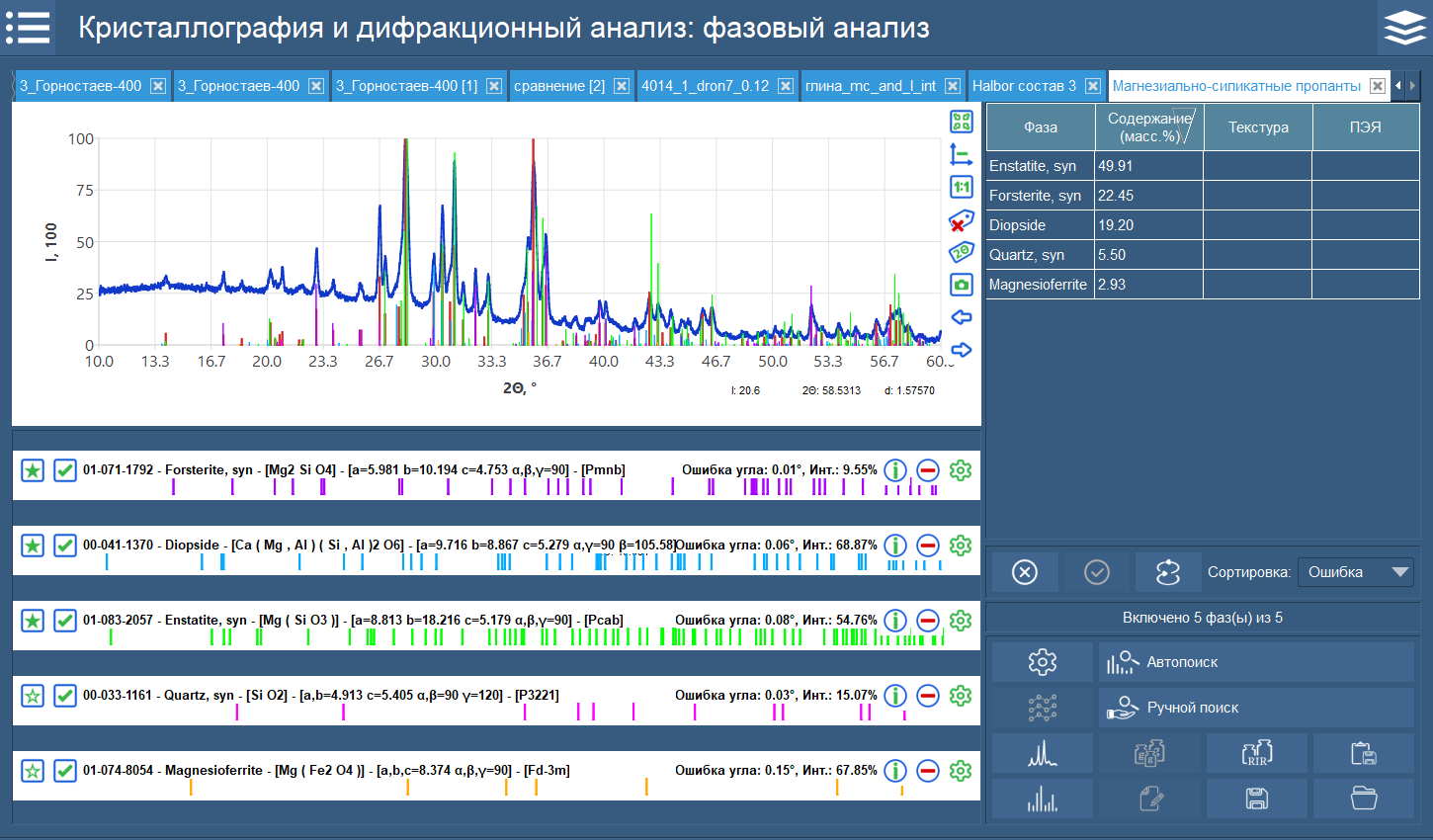
Example of qualitative and semi-quantitative analyses of mineral composition of magnesia-silicate refractory
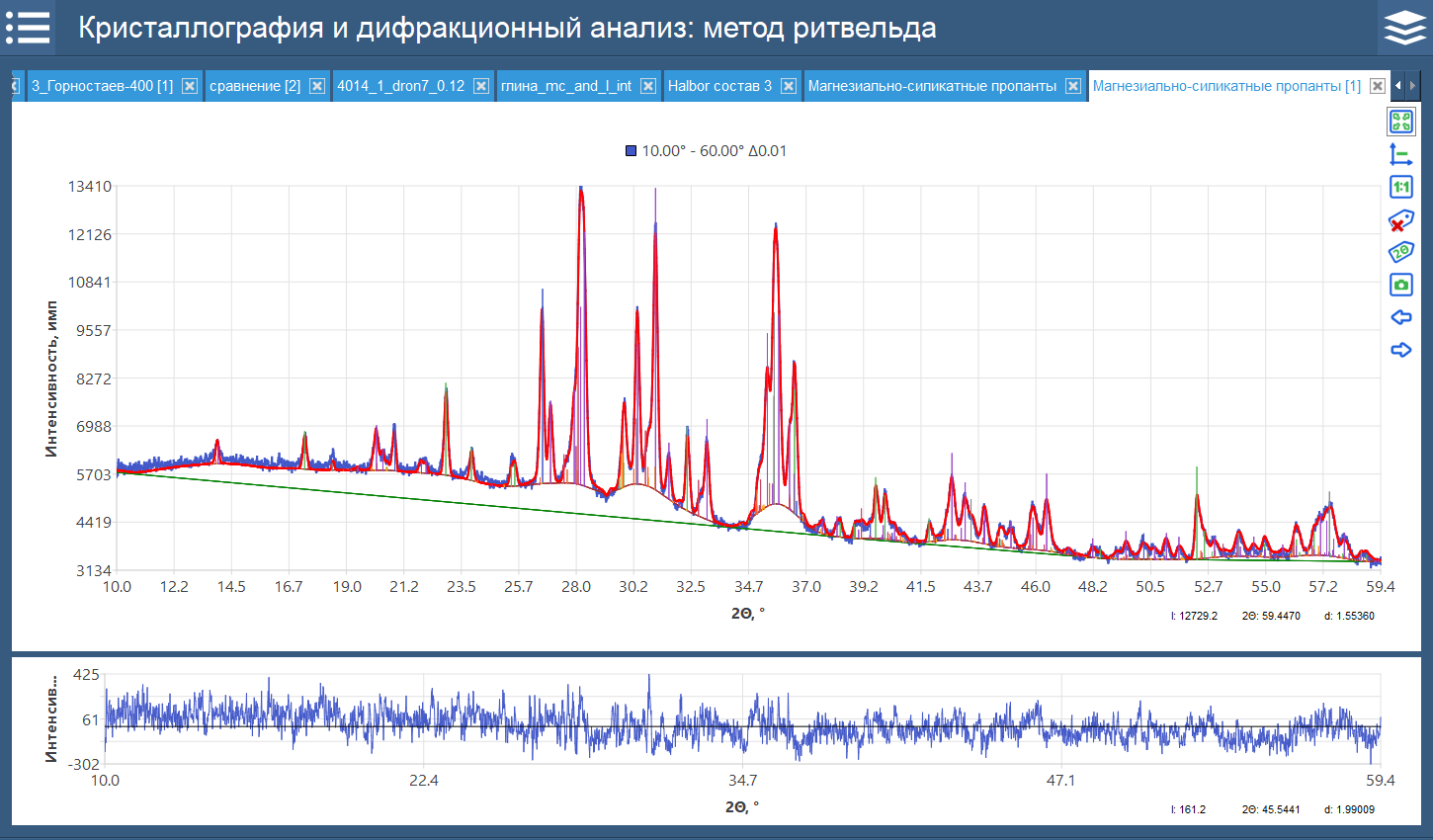
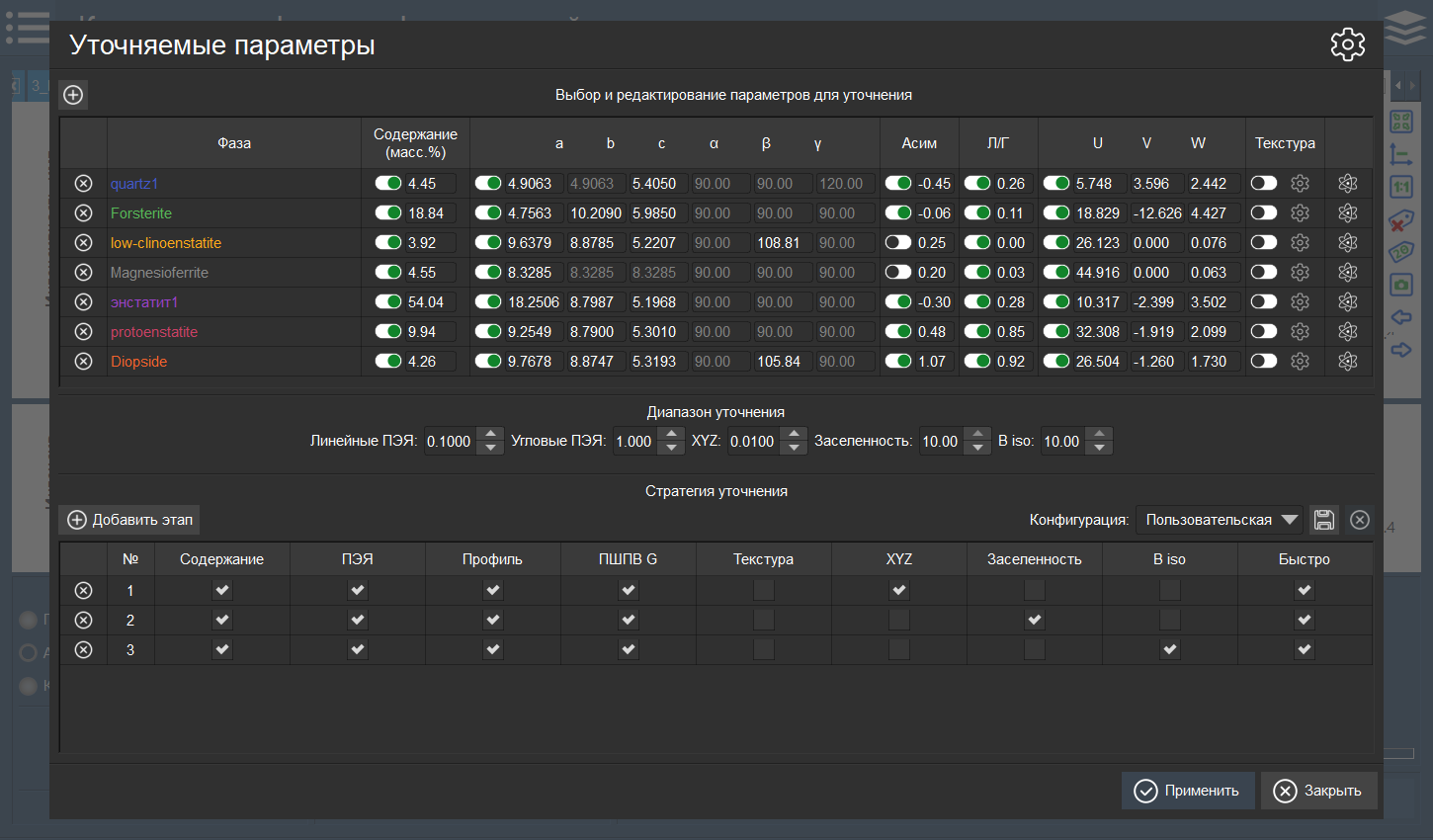
Example of quantitative analysis of the mineral composition of magnesia-silicate refractory by the full Rietveld method taking into account the amorphous phase
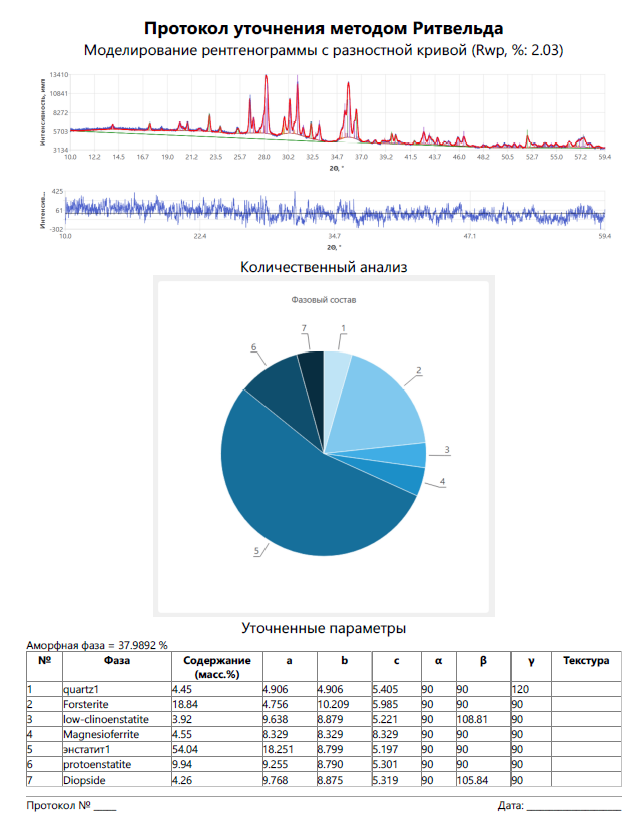
Protocol for the quantitative analysis of magnesia-silicate refractory by the Rietveld method considering the amorphous phase
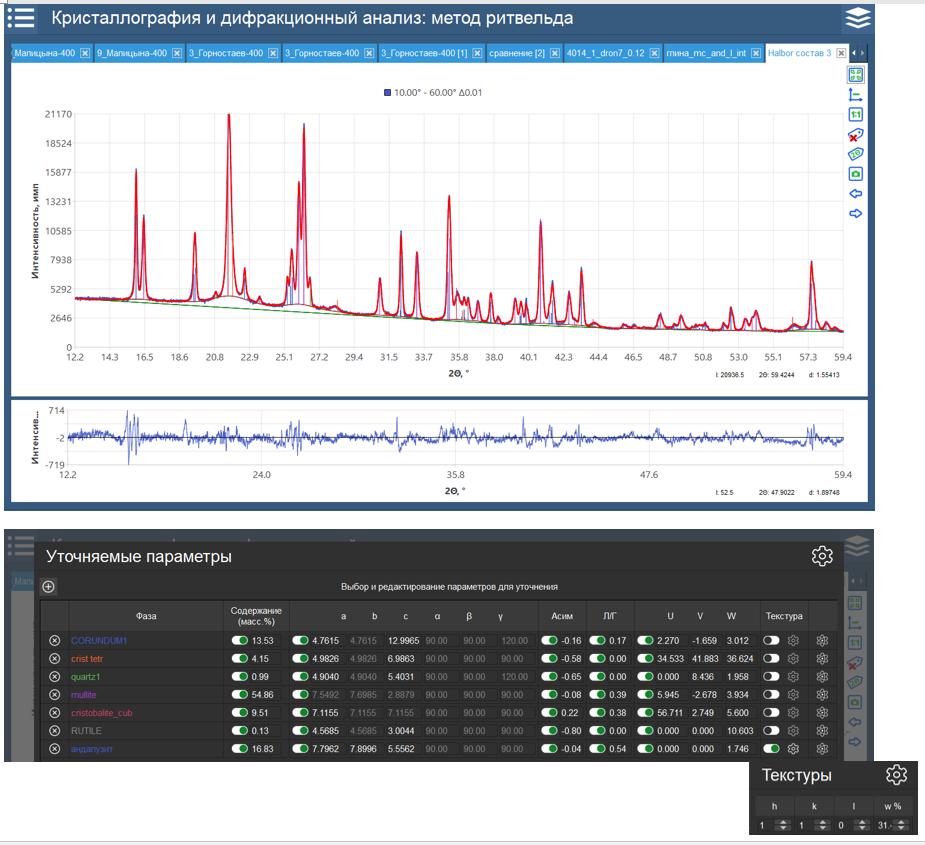
An example of quantitative analysis of the mineral composition of andalusite-based refractory by the full Rietveld method considering the amorphous phase and texture in andalusite towards [110].
![Protocol for quantitative analysis of andalusite based refractory by Rietveld method considering amorphous phase and texture in andalusite towards [110].](/upload/iblock/e48/9qpdne4d86u83sgwfivio6s66rln65l0/7.png)
Protocol for quantitative analysis of andalusite based refractory by Rietveld method considering amorphous phase and texture in andalusite towards [110].
Conclusion
The X-ray diffraction method is informative for the technological control of raw materials and finished products in the production of refractory materials, allowing for a full analysis of not only their mineral composition and degree of crystallinity, but also to identify those structural features that have a significant impact on their physical and mechanical properties.
The examples considered clearly demonstrate the functional and methodological capabilities of diffractometers manufactured by JSC "IC "Burevestnik", which, in combination with analytical software, offer a reliable solution to production and research problems.