Enrichment of mercury ores
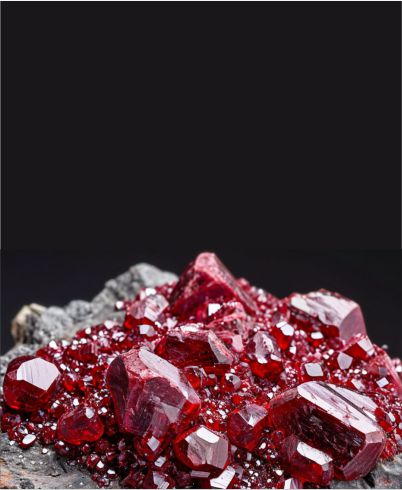
Mercury is a transition metal that at room temperature is a heavy, silvery-white liquid whose vapors are extremely toxic. Mercury remains an important but dangerous metal that requires strict control at all stages of extraction, use and disposal. Despite the importance of mercury to industry, in recent years developed countries have been implementing programs to modernize production facilities and switch to other mercury-free technologies.
Mercury is used in various industries due to its unique properties. It is used in metallurgy to create amalgam, in mining to extract gold, and in the chemical industry to produce chlorine and caustic soda. In the energy industry, mercury is used in nuclear power and batteries. In radio and electrical engineering, it is used in current rectifiers and batteries. Military applications include explosives. However, because of mercury's high toxicity, many of its uses are restricted or banned. The scientific community is actively seeking safe alternatives.
Current Challenges
-
Reduced quality of raw materials
Initial mercury content in ores is low (0.1-1%), which necessitates the processing of significant volumes of raw materials, and small grains of cinnabar, the size of which often does not exceed 50 microns, which requires more complex, combined and expensive methods of enrichment
-
Mineralogical aspects
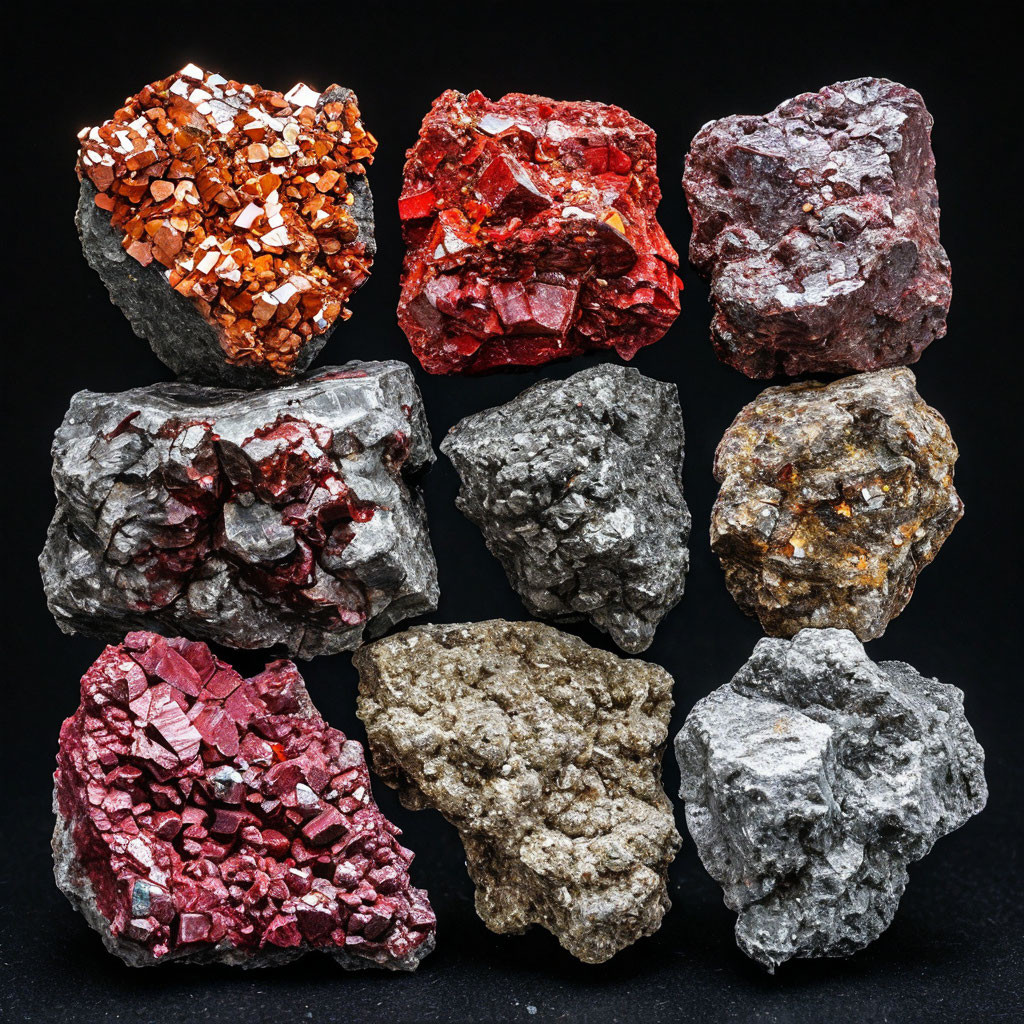
Mercury can be contained in different minerals, e.g. cinnabar, metacinnabarite, which requires adapting the technology to the specific composition of each ore. This makes it difficult to develop a universal process
-
Technological aspects
Efficient separation of mercury from other metals and impurities in ore is a complex task requiring specialized technologies. There is a shortage of modern, more efficient and environmentally friendly technologies compared to traditional methods. The process of roasting the ore results in the release of toxic mercury vapors, which requires the use of sophisticated gas cleaning systems. Mercury vapors negatively affect metal elements of equipment, causing corrosion and damage
-
Economic aspects
There is a trend in various industrial sectors to replace mercury with safer alternatives. This is due to several factors, including competition from secondary mercury from recycling, low market prices and high capital costs for modernization
-
Environmental aspects
Mercury vapor and its compounds, especially methylmercury, pose a significant risk to human health and the environment. Mercury production waste contributes to its accumulation in soil and aquatic ecosystems. It is therefore a complex and costly process to comply with strict environmental regulations and standards when handling mercury. The Minamata Convention, which entered into force in 2017, establishes international restrictions on the extraction and use of mercury
-
Infrastructural and socio-political aspects
Remoteness of deposits increases transportation costs; local communities protest against projects due to fears of negative environmental impact; tightening and legislative restrictions on the use of certain substances in various products
Enrichment
The process and efficiency of mercury ore beneficiation is a high-tech but risky process. The highest efficiency is achieved by thermal roasting (90-95%), but current trends are shifting towards recycling and hydrometallurgy to reduce environmental damage.
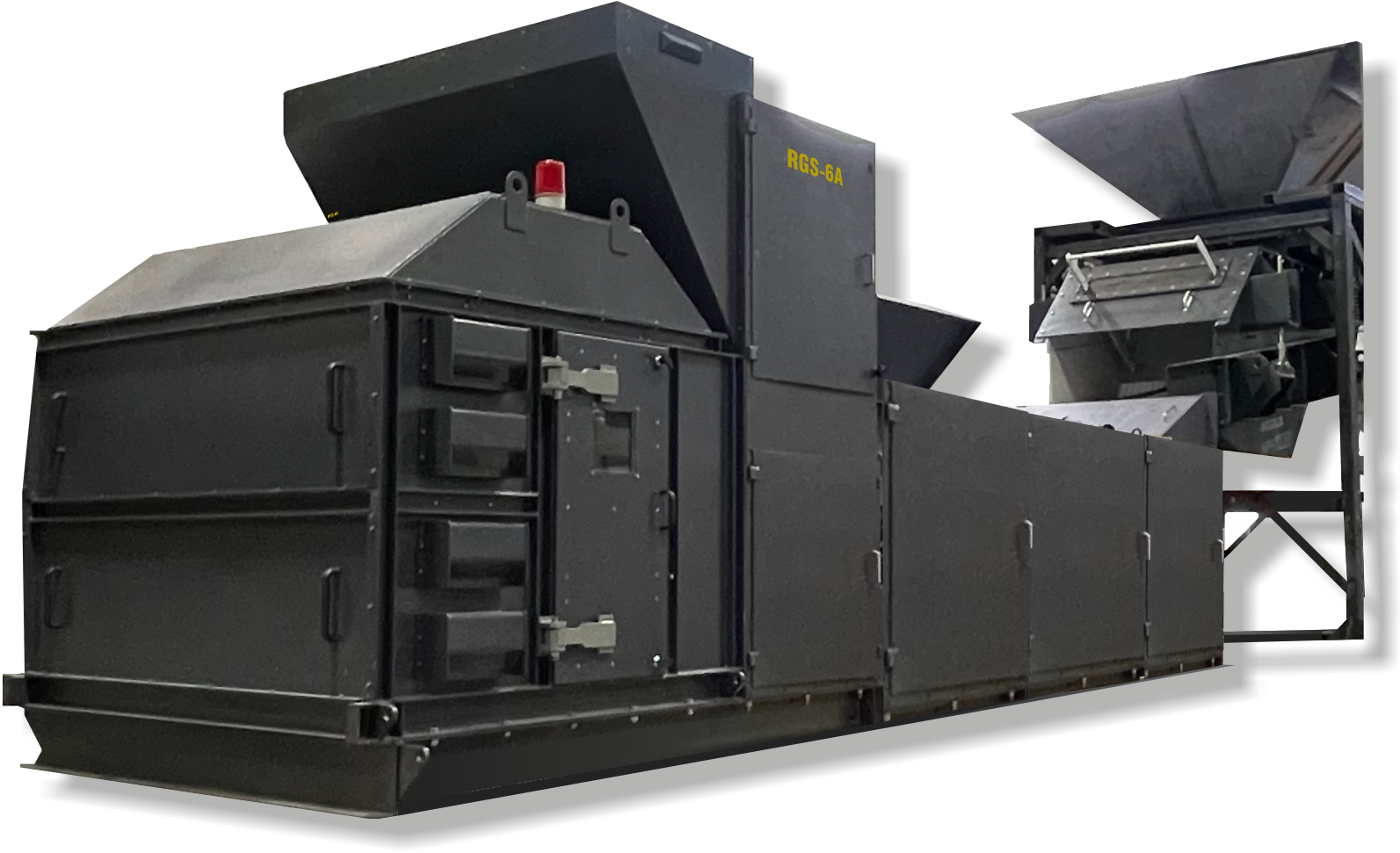
The development and implementation of advanced technologies for mercury ore beneficiation, in particular X-ray absorption separation (XRT), represents a promising direction for the pre-enrichment stage as part of an integrated treatment scheme. This technology is particularly effective for coarse ore fractions and waste rock removal.
The use of XRT technology will allow mining companies to automate and optimize recovery processes, reduce operating costs, minimize negative environmental impact and improve competitiveness, while an integrated approach, including the use of advanced beneficiation technologies, detailed analysis of geological data of deposits and optimization of technological processes, will create a more sustainable and efficient beneficiation system.
Principle of X-ray absorption -XRT- mineral separation:
-
The principle of X-ray absorption separation of mineral raw materials is based on the analysis of differential absorption of X-ray radiation by various minerals contained in the ore. This method provides identification of valuable mineral components and quantitative assessment of their content in the sample. The efficiency of X-ray absorption (XRT) separation of mercury ores is due to the fact that minerals with a higher effective atomic number (Zeff) or X-ray density (ρx) show an increased ability to absorb X-rays. The atomic density and chemical composition of minerals determine their ability to absorb X-rays. Minerals with high atomic density, such as cinnabarite (HgS) and metacynabarite (HgS), are detected by X-ray absorption (XRT) even in the presence of less dense rocks. This property of XRT allows for the automation of the ore sorting process, effectively removing waste rock and reducing the volume of material for downstream processing.
X-ray absorption (XRT) separation uses a method of analyzing the intensity of X-rays passing through ore samples. For this purpose, an X-ray detector is used to convert X-rays into electrical signals. The obtained data is processed by specialized software of the automated control system (ACS).
As a result of data processing, the system identifies as useful pieces of ore or mineral inclusions in the sample and determines their percentage of the total area. Comparing the resulting values to a predetermined separation threshold allows the ACS to classify the sample as “concentrate” or “tailings”.
After classification, the sample is directed to the appropriate compartment (concentrates or tailings) by means of a pneumatic stripper.
The technology of preliminary X-ray absorption-XRT enrichment of mercury ores is the most effective:
-
Density/composition contrast
In cinnabar, mercury-gold and metacinnabarite ores, cinnabarite (HgS, density ~8.1 g/cm³) and metacinnabarite (HgS, density ~7.7 g/cm³) are sharply contrasted with waste rock including quartz, calcite, pyrite, antimonite, such as quartz - 2.65 g/cm³, clay minerals - 2-2.5 g/cm³, so the higher the contrast, the better the separation. In complex antimony-mercury or mercury-mercury-arsenic ores, lingstonite (HgSb₄S₈), schwartzite (HgSb₄S₇), auripigment (As₂S₃), realgar (AsS) and tofmanite (Hg₃AsO₄) are also dense enough to be distinguished against the background of waste rock.
-
Granule size
A valuable mineral (cinnabar) forms large, clearly distinguishable grains. This allows X-rays to clearly identify the mineral by its high atomic density (mercury has a high atomic number, Z=80).
Advantages of X-ray absorption (XRT) separation of mercury ores:
-
High efficiency and cost-effectiveness
Firstly, there is no need for water, secondly, the volume of ore processed is reduced by 20-40%, crushing and grinding costs are reduced, thirdly, the concentration of the content of useful components is increased before further processing, for example, before flotation and roasting.
-
Environmental friendliness
Minimizes the volume of material processed in subsequent processing/recycling stages, which reduces waste and allows for better control and management of emissions and discharges.
-
Productivity
Improved feed material characteristics lead to a higher quality concentrate and allows for more efficient methods to be applied in the future, e.g. pretreatment/processing can prepare the ore for more selective and efficient methods.
Conclusion
X-ray absorption separation technology (XRT) is a reliable and environmentally friendly method of mercury ore beneficiation, which is most effectively used in the processing of high contrast ores. The application of this technology allows to significantly reduce the volume of processed material, as well as minimize the consumption of water and chemical reagents. Given its promising potential, XRT technology has the potential to take a leading position among modern methods of processing various ores.