Enrichment of manganese ores
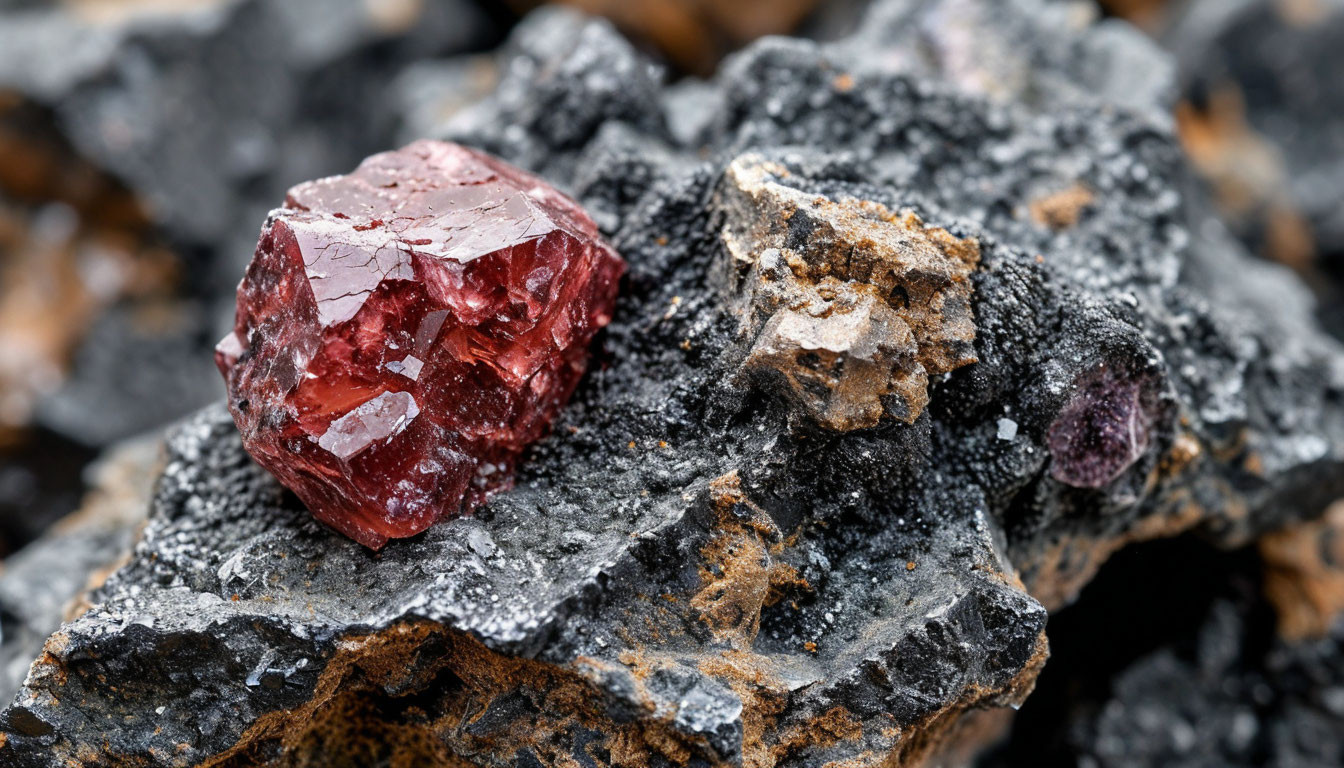
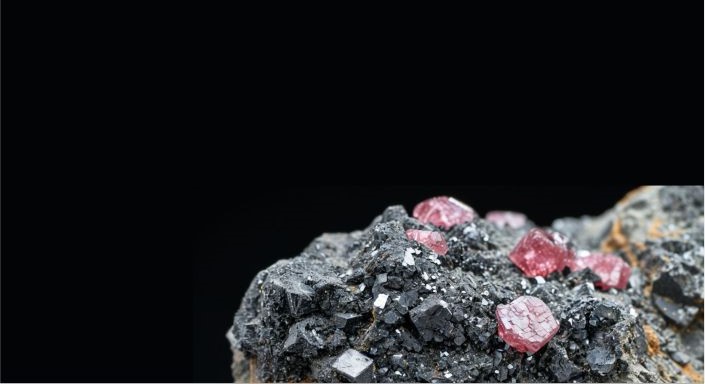
Manganese is an important component in various industrial sectors.
Manganese is used in ferrous and non-ferrous metallurgy, improving their mechanical properties and corrosion resistance, in the electrical industry it is used for the manufacture of magnetic conductors, in the chemical industry and serves as a catalyst. Manganese is also used in glass production, agriculture and printing.
Current Challenges
-
Mineralogical aspectsThe use of rich manganese deposits is being exhausted, forcing a shift to less efficient deposits with low Mn content and high levels of impurities
-
Technological aspectsDifficulty of separation of manganese minerals from waste rock and high energy costs of traditional enrichment methods
-
Social and economic aspectsWorkers' health (risk of manganism) and social conflicts with local communities
-
Demand growthThe battery industry has high requirements for Mn for Li-ion and solid-state battery cathodes (e.g., LiMn₂O₄), the emergence of specialized products such as electrolytic manganese (EMM) and manganese dioxide (EMD) production
-
Environmental aspectsRisks of environmental pollution at all stages - from extraction to transportation, which requires stricter environmental standards and certification
-
Logistical aspectsDifficulties in delivering raw materials from remote fields
Enrichment
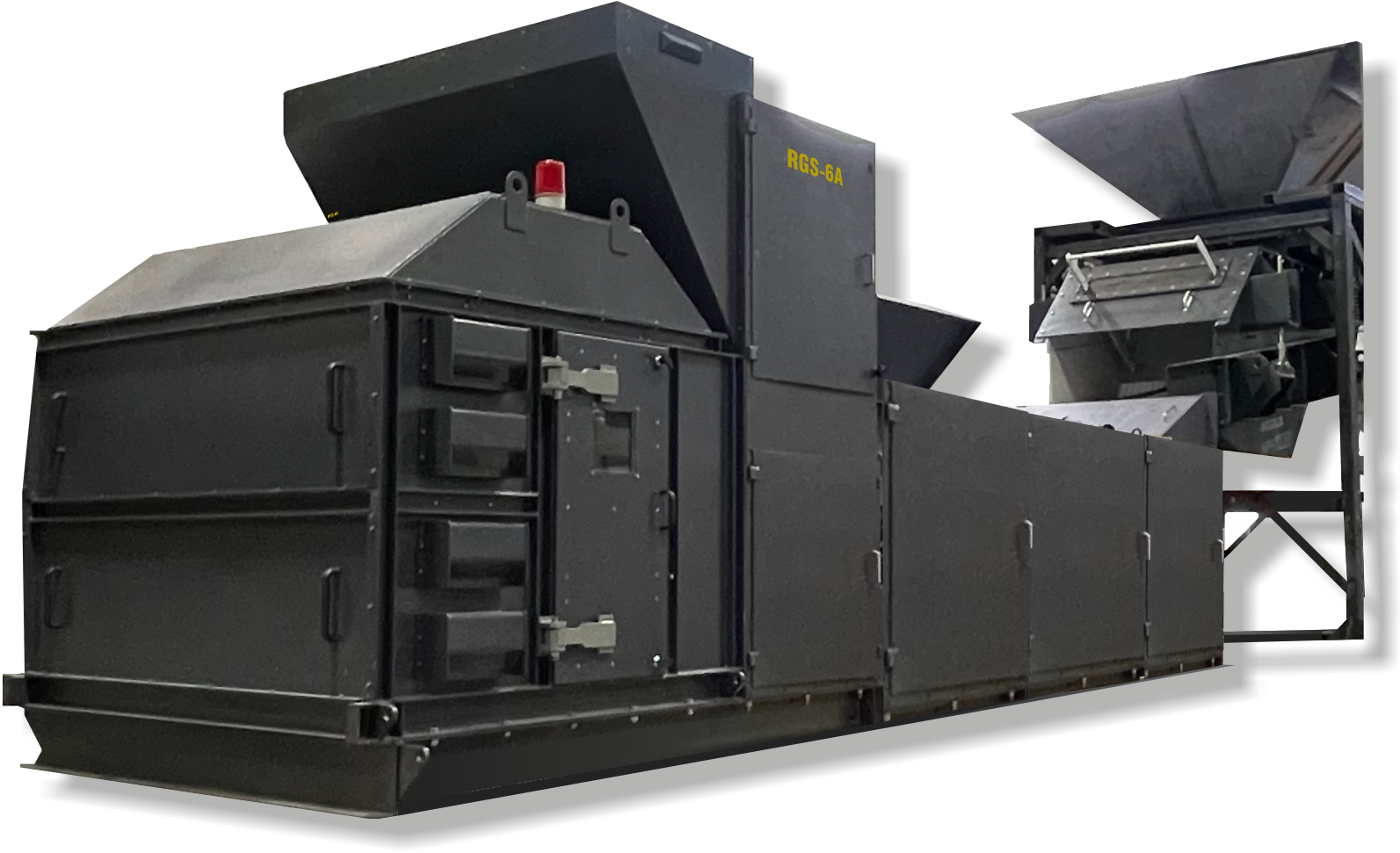
The development and implementation of safe, automated, innovative technologies for manganese ore beneficiation, such as “dry beneficiation methods” - X-ray absorption (XRT) separation and other advanced methods to reduce water consumption, is a priority area for the introduction of “green” technologies to improve the efficiency of manganese mining.
Application of XRT technologies will allow mining companies to optimize extraction processes, reduce operating costs, minimize negative impact on health and the environment, increase competitiveness, and an integrated approach, including the use of advanced beneficiation technologies, detailed analysis of geological data of deposits and optimization of technological processes, will create a more sustainable and efficient manganese mining system.
Principle of X-ray absorption -XRT- mineral separation:
-
The principle of X-ray absorption separation of minerals is based on the analysis of differences in the ability of different minerals present in the ore to absorb X-rays. This method allows to identify valuable mineral components and determine their percentage ratio in the sample. The efficiency of X-ray absorption (XRT) separation of manganese ores is due to the fact that minerals with higher effective atomic number (Zeff) or X-ray density (ρx) show an increased ability to absorb X-rays. Manganese minerals (pyrolusite, psilomelane, rhodochrosite) have higher density (4.5-5.2 g/cm³) compared to host rocks (quartz, clays, carbonates - 2.5-2.7 g/cm³) or other heavy minerals (hematite, pyrite). This difference in density allows X-ray detectors to register differences in X-ray absorption, which in turn allows automated sorting systems to separate manganese-rich fractions from waste rock.
X-ray absorption separation analyzes the intensity of X-ray radiation passed through ore samples using an X-ray detector that converts this radiation into electrical signals. The obtained information is processed by specialized software of the automated control system (ACS).
As a result of data processing, the system identifies as useful mineral inclusions in the sample and determines their percentage of the total area. By comparing the values obtained with a predetermined separation threshold, the ACS classifies the sample as “concentrate” or “tailings product”. After classification, the sample is directed to the appropriate compartment (concentrate or tailings) by means of a pneumatic ejector.
Preliminary XRT manganese ore beneficiation technology is the most efficient:
-
Density/composition contrast
The more the atomic densities of manganese minerals and their host rock differ, the more effective the separation process is. This is especially true when the rock contains both “light” (quartz, clays, carbonates) and “heavy” (hematite, pyrite) minerals. As an example, ores rich in pyrolusite (MnO₂), in which the content of iron-bearing minerals (hematite, magnetite) is minimal or easily removed.
-
Granule size
Coarse-grained ores with large chunks of manganese minerals (pyrolusite, psilomelane) and waste rock provide a clear separation of manganese minerals, where the formation of well-defined veins, nodules or layered structures is observed. This technology is also applicable to coal and clay ores in which manganese is concentrated in separate zones. For example, this applies to oxide manganese ores with a quartz matrix or sedimentary deposits.
-
Distribution of manganese minerals
XRT is effective in treating ores with heterogeneous distribution of manganese minerals, where the formation of well-defined veins, nodules or layered structures is observed. This technology is also applicable to coal and clay ores in which manganese is concentrated in separate zones. For example, this is the case for oxide manganese ores with a quartz matrix or sedimentary deposits.
-
Manganese mineral content
XRT can effectively remove up to 50% of waste rock at the initial stage of processing of poor and complex ores (manganese content 15-30%), which allows increasing the concentration of manganese in the concentrate up to 35-50%. This technology is also applicable for processing old tailings containing large fragments of manganese minerals.
Advantages of X-ray absorption (XRT) separation of magnesite ores:
-
High efficiency and cost-effectiveness
First, the lack of water requirements makes this method ideal for arid regions, second, the preliminary removal of up to 30-50% of waste rock helps to reduce energy costs for grinding and processing of material, third, effective for ores with Mn content of 15-25%, increasing the concentration to 35-50%.
-
Environmental friendliness
Minimizing the volume of material handled in subsequent processing stages of recycling reduces waste and allows for better control and management of emissions and discharges.
-
Productivity
Improved feed material characteristics lead to a higher quality and purer finished concentrate and allows more efficient methods to be applied, e.g. pretreatment/processing can prepare the ore for more selective and efficient methods.
Conclusion
XRT separation technology offers a reliable and environmentally friendly solution for the beneficiation of manganese ores, especially where the useful minerals have distinctive X-ray absorption properties. By optimizing sensor settings for particle size, this technology can significantly improve ore quality while reducing downstream processing costs. As improvements are made, XRT technology could become a key technology in modern manganese ore processing.